|
GREEN IGUANAS ARE HERBIVORES
In their natural habitat, the green iguana's diet is made up of about 70% leaves, 10-15% flowers, and the rest is soft fruit. Recent studies have shown that the green iguana is completely herbivorous throughout it's entire life. In spite of this information there still exists today the misconception that it is necessary to feed them bugs and animal protein.
|
WHY SHOULDN'T I FEED BUGS OR ANIMAL PROTEIN TO MY IGUANA?
|
Iguanas have a special organ called the "hind gut", which is located between the small and large intestine. Similar to ruminants in the mammal world, this organ houses beneficial bacteria, or "micro flora" that breaks down the cellulose in plants. This fermentation process extracts 30-40% of the plants nutrients for absorption in the body to use for metabolism and growth. This type of digestive system is unique to herbivouous animals, including lizards.
|
For optimal health, the blood chemistry should be a 2:1 ratio of Calcium to Phosphorus. This means that the nutritional makeup of the food the iguana eats should be two parts of Calcium to one part of Phosphorus. The chemical make up of crickets, for example, is about 1:30. This is an extremely high amount of Phosphorus and very taxing to the kidneys. After about 4-6 years of a diet that contains bugs and/or animal protein, the kidneys start failing from trying to filter out all that Phosphorus. Even before that happens, the iguana will suffer from a host of diet-related maladies, commonly referred to as "Metabolic Bone Disease".
|
These health problems are completely avoidable with the proper husbandry, including diet. For that matter, there are certain vegetables and fruits that are high in Phosphorus and should be avoided altogether. Corn has a high Phosphorus content. Yet most commercial iguana foods are corn based. This is why it is so important to feed your iguana fresh, dark leafy greens and finely chopped vegetables.
|
SO WHAT DO I FEED MY IGUANA?
Dark, leafy greens such as Collard, Turnip and Mustard greens have some of the best Ca:P ratios to use for the base of your iguana's diet. These can be found in major supermarkets, in most areas. Dandelion greens are an excellent food and can be harvested from your yard, IF it isn't sprayed with a pesticide/herbicide. Romaine lettuce is a popular choice, but not really the best one. It doesn't pack as much a nutritional punch as the darker greens. It can be used to add in, if you're low on the cooking greens. Iceberg lettuce is only good for stuffing tacos, and should not be used. Other greens like arugula, bagged greens like "Spring Mix", "Herb Mix", or "Field Greens" can be used as occasional filler.
Green iguanas do not pre-digest their food with saliva like we do. But to add more nutrients to the diet, we "pre-digest" hard vegetables by processing them in a blender, or food processor until finely chopped.
|
HARD VEGETABLES THAT CAN BE PROCESSED
GREEN PEPPERS
GREEN BEANS
WAX BEANS
SNOW PEAS
PEA PODS
|
OTHER VEGETABLES THAT CAN BE SHREDDED:
PARSNIPS
WINTER SQUASH SUCH AS: ACORN; BUTTERNUT
ZUCCHINI
YELLOW CROOKNECK
CARROTS
|
FLOWERS
Iguanas love flowers! Be very careful when feeding flowers. If you buy from a florist, the flowers have been sprayed. It usually takes about 3-6 months for the chemicals to flush from the plant. Dandelion flowers are another favorite, and the same warning applies. Nasturtiums are also relished. If you can grow them organically, your iguana will love you for it!
|
FRUIT
Fruit should comprise no more than 10% of the daily diet. Because they are the lowest in Phosphorus, Mangos and Blueberries are the best choices.
Other fruits your iguana will enjoy are:
Strawberries
Kiwi
Banana
Grapes
Chop the fruit into small pieces or put in the blender with the veggies.
|
COOKING GREENS TEND TO BE SANDY. THOROUGHLY RINSE WITH CLEAN WATER
|
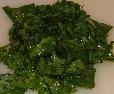 |
| Slice and chop greens into small pieces. |
|
|
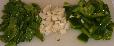 |
| Cut veggies into small pieces and process. |
|
|
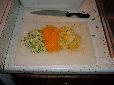 |
| Use a grater to shred hard squash. |
|
|
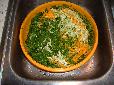 |
| Add processed veggies to greens and mix together. |
|
|
Feed your iguana every day. Hatchlings will eat a lot as they are constantly growing! Start out with half a cup each day. If your iguana eats up everything and licks the plate clean, give it a little more every day, until all the food is eaten. When it starts to leave a little on the plate, make a note of how much was fed.
Adults will usually eat about two cups a day, but it depends on the iguana. Larger iguanas, of course, will eat more.
|
| In the United Kingdom? Try this! |
Pet iguanas are all over the world! But not all keepers have access to fresh greens and veggies. Or they might be called by a different name. Our friend in the United Kingdom, Shaun Dixon, has written up a list of foods he uses for his iguanas at Dixon's Zoo.
"For us keepers in the UK a lot of the foods we have available on food charts like the Green Iguana Society is not available to us, so we improvise. Most often I am amazed to find that keepers didn't know that other things can be fed. In truth these food charts should only be used as a stepping stone. I aim to feed my iguanas around 20 greens a week, mixing them all in with the staple foods.
Spring greens
Mustard Greens (2 types and I grow this myself the seeds are cheap enough)
Mustard Cress (some green grocers sell this)
Beet greens (I get mine from a car boot sale veggie stall)
Radish tops
Watercress
Mazuna greens
Rocket
Dandelion leaves
Nasturtium leaves
Plantain
Speedwell
Nettle
Sowthistle
Packchoi
Choi sum
Salad burnet
Chicory, (2 different types) one is a plant I grow from shelled warriors and it spouts little flowers, the other is the chicory you can buy in Tesco’s.
Sage
Tarragon
Rosemary. (Herbs vary quite a lot)
Where possible try to get down to the allotments and get some turnip tops, these are not available on the shelves for us UK keepers, strive for the best variety you can.
This does not include the flowers, or veggies you can include, even with a small space in a garden you should be able to grow some nasturtiums, viola, hibiscus, petunia, and carnation.
Iguana diets in the wild can easily consist of over 300 types of food, so aiming for variety is best.
I also urge keepers to look into what is available on tortoise forums, and grow some foods, what is safe vegetation wise for them is likely safe for your iguana, although avoid grasses."
Regards Dixon
|
|